



















Domestic Facade of a Catastrophe: When Evil Does Not Necessarily Look Like a Demon
Blogs | 15 May, 2026 at 17:02 | 3,274 | Author: By Olena Zelenina
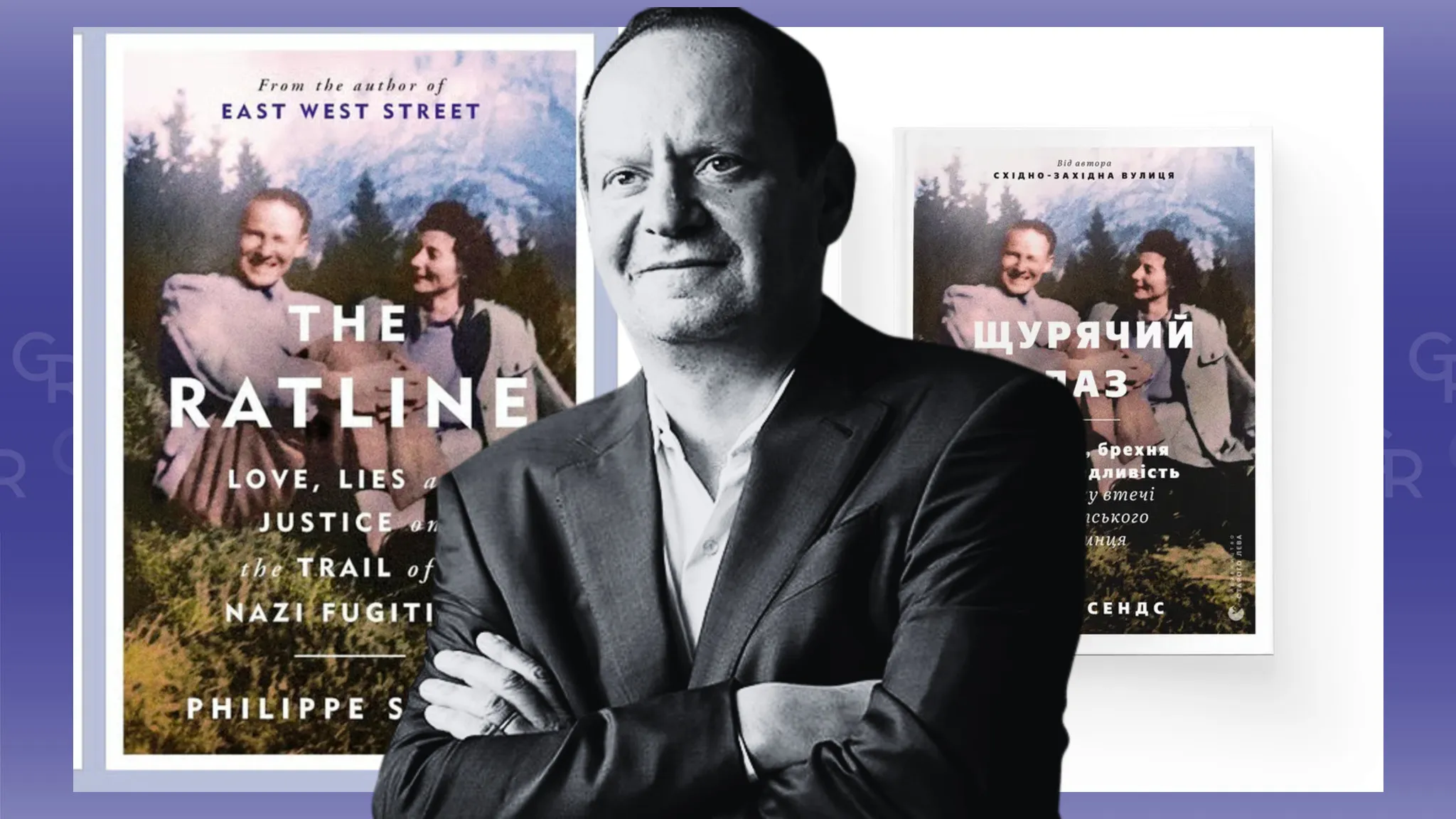
Collage by Olena Zelenina.
Sometimes history holds up mirrors that are terrifying to look into. One such mirror is the diary. Those written at night by lamp-light, where a person remains alone with themselves. But what if, in one case, these entries are a blatant forgery, and in another — a sincere, yet even more horrific attempt to construct an alibi before God and posterity?
The Hitler Who Never Was:
The Trap of "Privacy"
Recently, I came across one of the greatest media disgraces of the 20th century — the "Hitler Diaries," published by Stern magazine in 1983. It was a "staggering" fake by Konrad Kujau. Why did experienced editors and historians believe in these notebooks filled with forged Gothic script?
The answer is simple and terrifying: they wanted to see a "different" Hitler. Not the monster at the podium, but a man who complains about digestion, is jealous of Eva Braun, and... "does not know" about the horrors of the concentration camps. The forgery worked because it offered domestic routine as a veil for crime. If he drinks tea and pets his German Shepherd, he is supposedly... "one of us."
Charlotte’s "Ratline":
Love Against a Backdrop of Ashes
But there is another book I read this winter by flashlight because Russian war criminals had left my house without electricity. It is The Ratline by Philippe Sands. A documentary investigation into the life of Otto von Wächter, Governor of the District of Galicia, whose signatures stand on the orders to create the Lviv Ghetto.
REFERENCE "Gromada"
Otto von Wächter (1901–1949) — Austrian lawyer and Nazi official, member of the NSDAP and the SS. From May 1944, SS-Gruppenführer and Governor of Galicia within occupied Poland.
Sands gained access to the family's private archive: thousands of letters and diaries of Otto’s wife, Charlotte. And this is no Kujau forgery. This is the true voice of a woman who loved her Otto to distraction.
It is particularly chilling to read about the Wächter family's daily life in Lviv. In her letters and entries, Charlotte describes Galicia as a kind of "family idyll." While her husband, Otto, worked on the "Final Solution to the Jewish Question," she enjoyed her status as the District's First Lady.
In the diary, we see enthusiastic descriptions of their luxurious residence on Ostrozkykh Street (now an elite residential area near the park), where they hosted receptions. Charlotte reports in detail on trips to the Carpathians, skiing, and how she selected exquisite furniture and artworks for their estate — often items confiscated from those just sent to Bełżec, one of the cruelest mass murder sites during the Holocaust in Poland.
This contrast between domestic comfort, the choice of curtains, and the smell of fresh pastries on one side, and the death of thousands of Lviv residents outside the window on the other, makes her entries a documentary witness to absolute moral blindness.
In English-language reviews (from The Guardian to Financial Times), critics aptly note: Charlotte’s diaries are a form of self-hypnosis. She was not a victim of circumstances. She was a "true believer" in the Reich. Her "we are not to blame" was not a lack of information; it was a conscious choice to see only love, ignoring the blood on the robes.
The Mask of an "Ordinary Person."
Does Evil Necessarily Look Like a Demon?
Comparing Kujau’s forgery and von Wächter's real memoirs, one sees a common denominator. It is an attempt to substitute political responsibility with private emotion.
In the fake, they tried to sell us Hitler as a "hostage of circumstances."
In reality, Charlotte von Wächter maintained the image of a hero-husband who was "simply doing his duty" until her death in 1985.
This is the most dangerous aspect of the "ordinariness of evil." When a murderer becomes "just a person" — a father, a husband, a lover of art — he gains a chance for rehabilitation in the eyes of future generations.
Reading The Ratline, I repeatedly caught myself thinking: how far can a person go in the desire to justify their own blood? Philippe Sands worked on the book alongside Otto's son, Horst von Wächter. I saw in the author's description that Horst is an intelligent, pleasant, and in his own way noble person, who lives in an ancestral castle and cherishes the memory of his parents.
What struck me was this: he sincerely, almost childishly, did not understand why the whole world considered his father a criminal. I thought about how Horst effectively became a hostage to his mother's own diaries. He gave Sands access to the archive not to expose his father, but because he was convinced: these records — about love, loyalty, the "sweet" part of the system — would be able to rehabilitate Otto in the eyes of society. For him, his father was not the architect of the Holocaust in Lviv, but that same "Ottl" from the pages of his mother's notebook.
A crucial clarification is needed here: who is Philippe Sands? He is not just a documentarian; he is a prominent international lawyer. I have read his previous landmark work, East West Street, where he explores the origins of modern international law through the biographies of two outstanding lawyers from Lviv — Hersch Lauterpacht and Raphael Lemkin. It was they who introduced the terms "crimes against humanity" and "genocide" into global discourse.
And here an incredible, almost biblical plot emerges: Horst von Wächter hoped that Sands, as a serious researcher, would help him find evidence of his father's "goodness." But the opposite happened: Sands' legal impartiality only highlighted more brightly the chasm between the Wächters' domestic comfort and those very crimes against humanity for which the Nazis were tried at Nuremberg.
It looks like true intellectual blindness: when a person sees the facts, sees the death toll, but chooses to believe not the documents of tribunals, but cozy family memories of walks and shared breakfasts. This is a terrible lesson in how family myths become armor through which no remorse can penetrate.
Why is this important right now, on the eve of the Day of Victory over Nazism? Because we again see how the aggressor tries to put on the mask of an "ordinary person." Russian soldiers record videos about how they love their children, and their wives post kittens and flowers on social media, calling "not to mix politics with life."
But the example of Charlotte von Wächter proves: private life is not an indulgence. Sincere love for one's family does not cancel participation in genocide. The true moral of both "editions" (the fake and the real) is that evil does not necessarily look like a demon. Most often, it looks like a person who drinks coffee in the morning, signs execution lists during the day, and in the evening writes in a diary about what a beautiful sunset it was today.

Comments
Some more relevant news for now